Decryption
Installation | Video
Decryption (Hitbasrut) | Maya Zack
Solo exhibition, Ramat Hasharon Contemporary Art Gallery. Curator: Ravit Harari 2023
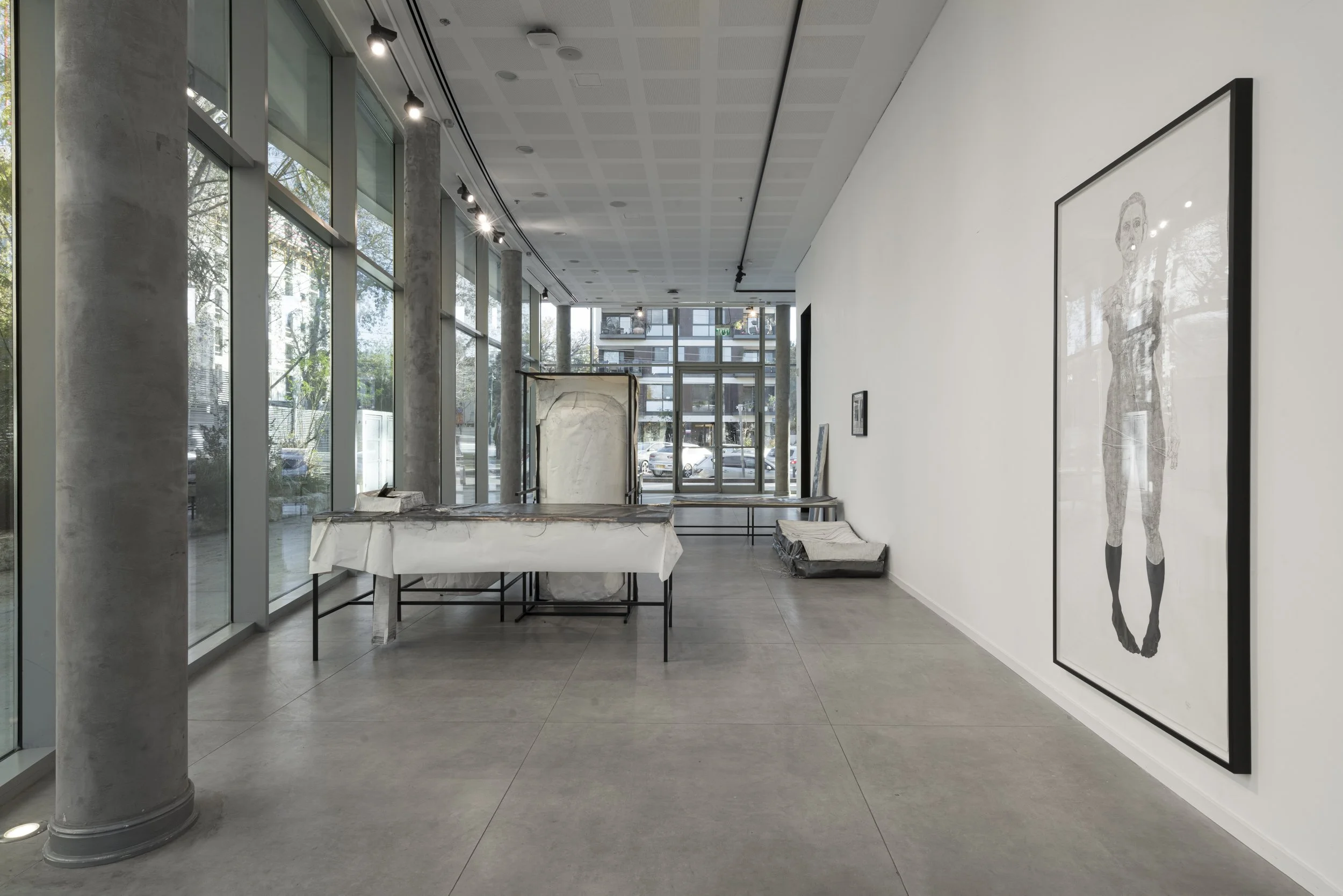
Video projection; Installation: paper, graphite, metal, thread; Drawings: graphite on paper. dimensions: variable.
scroll down for more images | photos: Liat Elbling
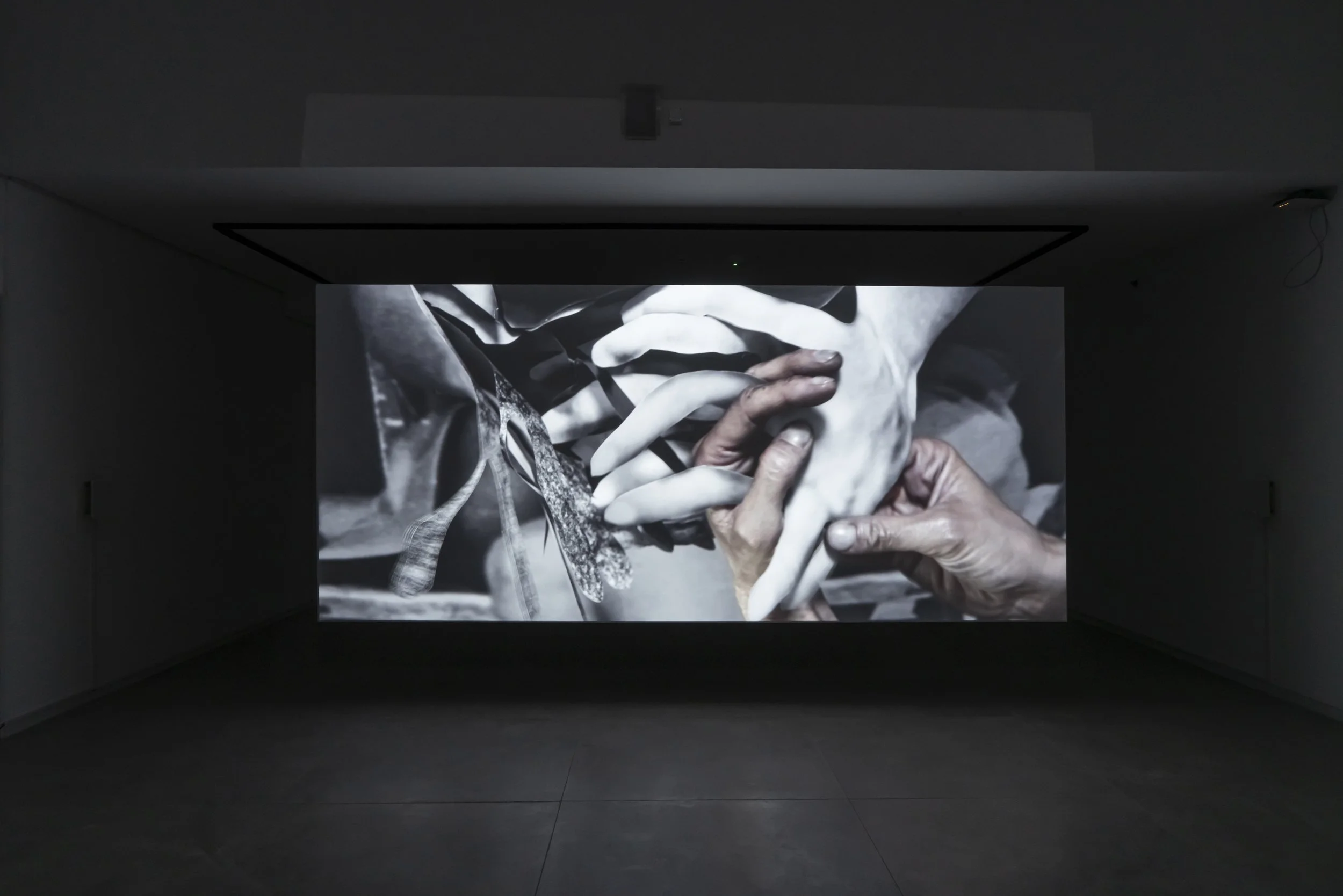
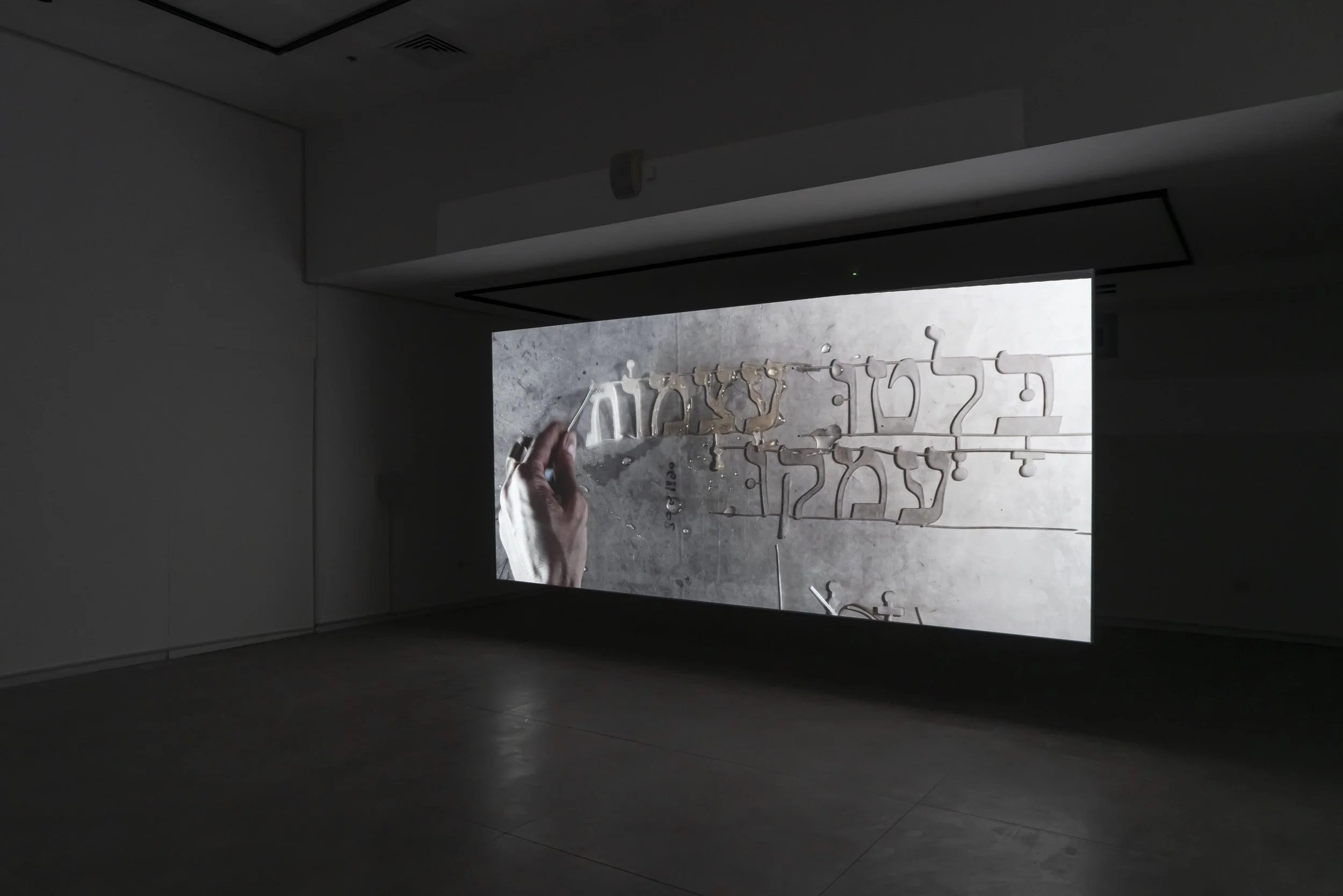
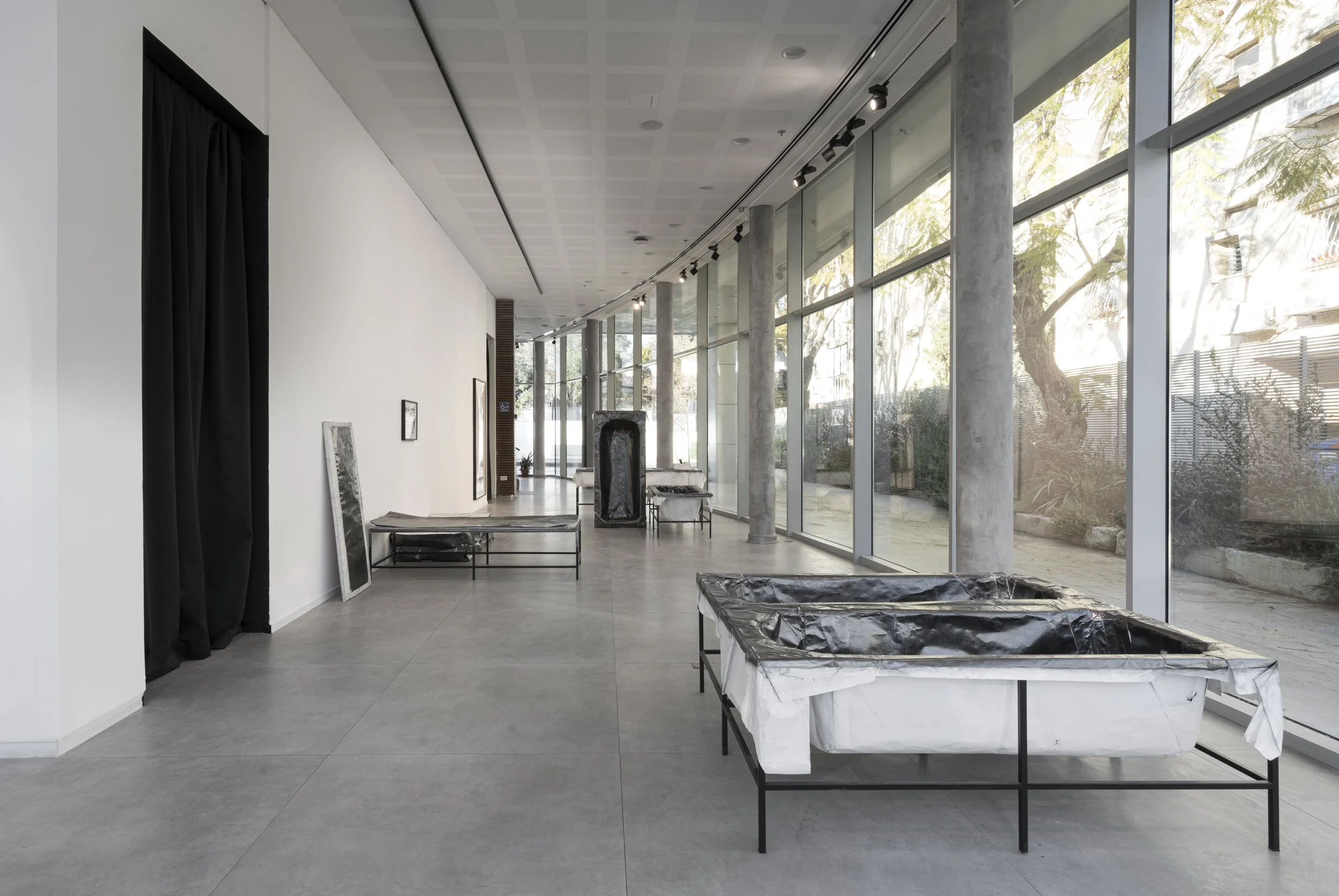
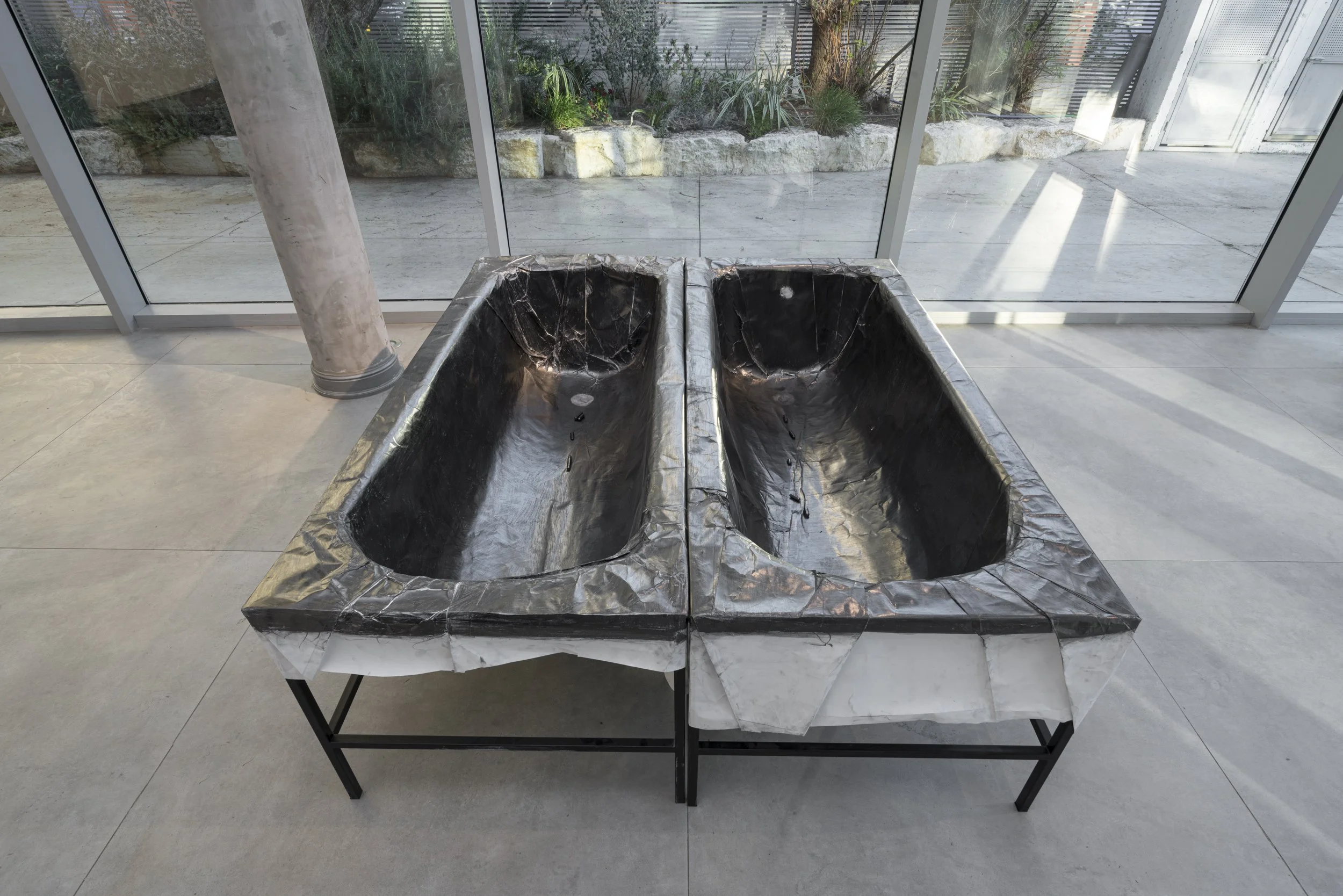
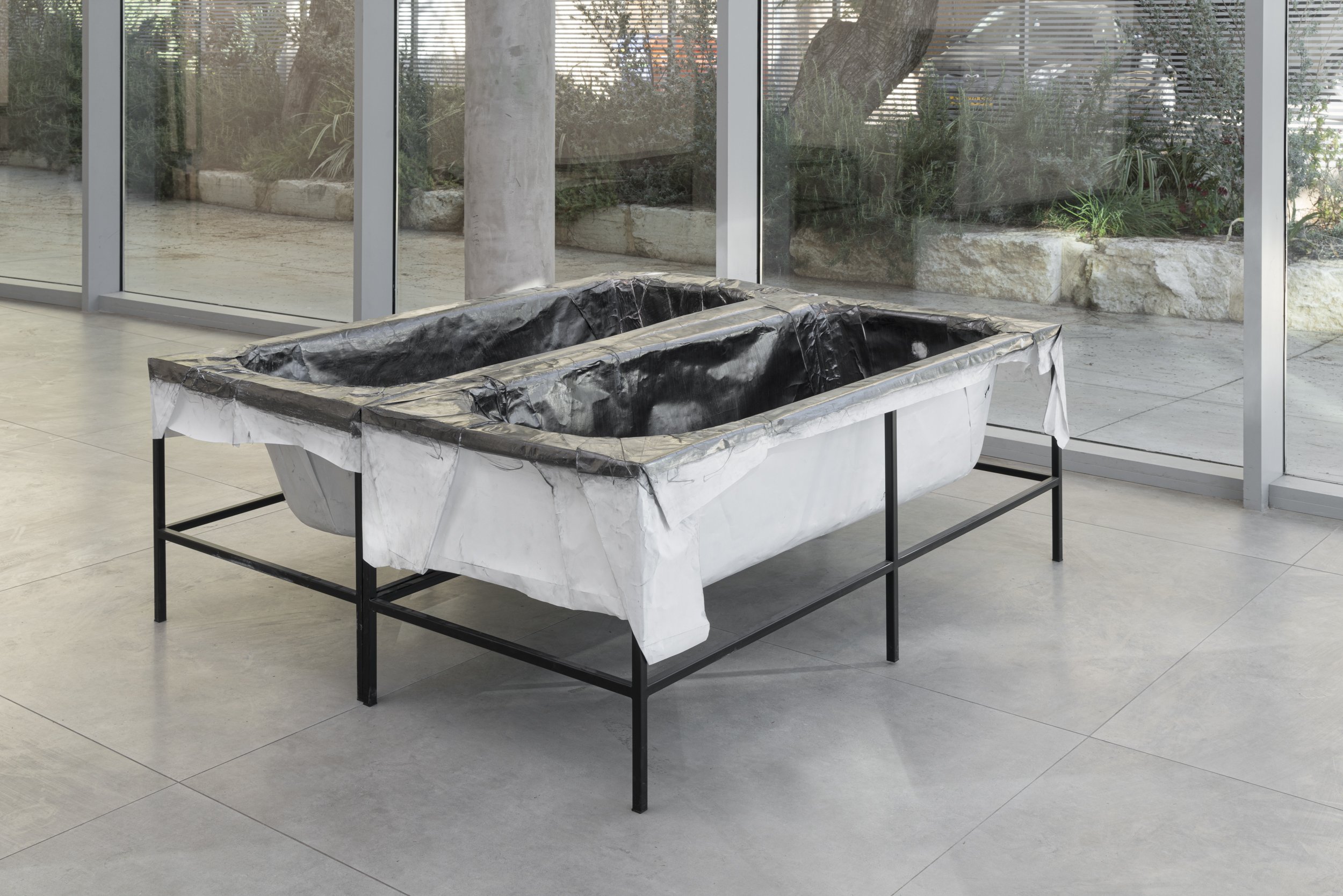
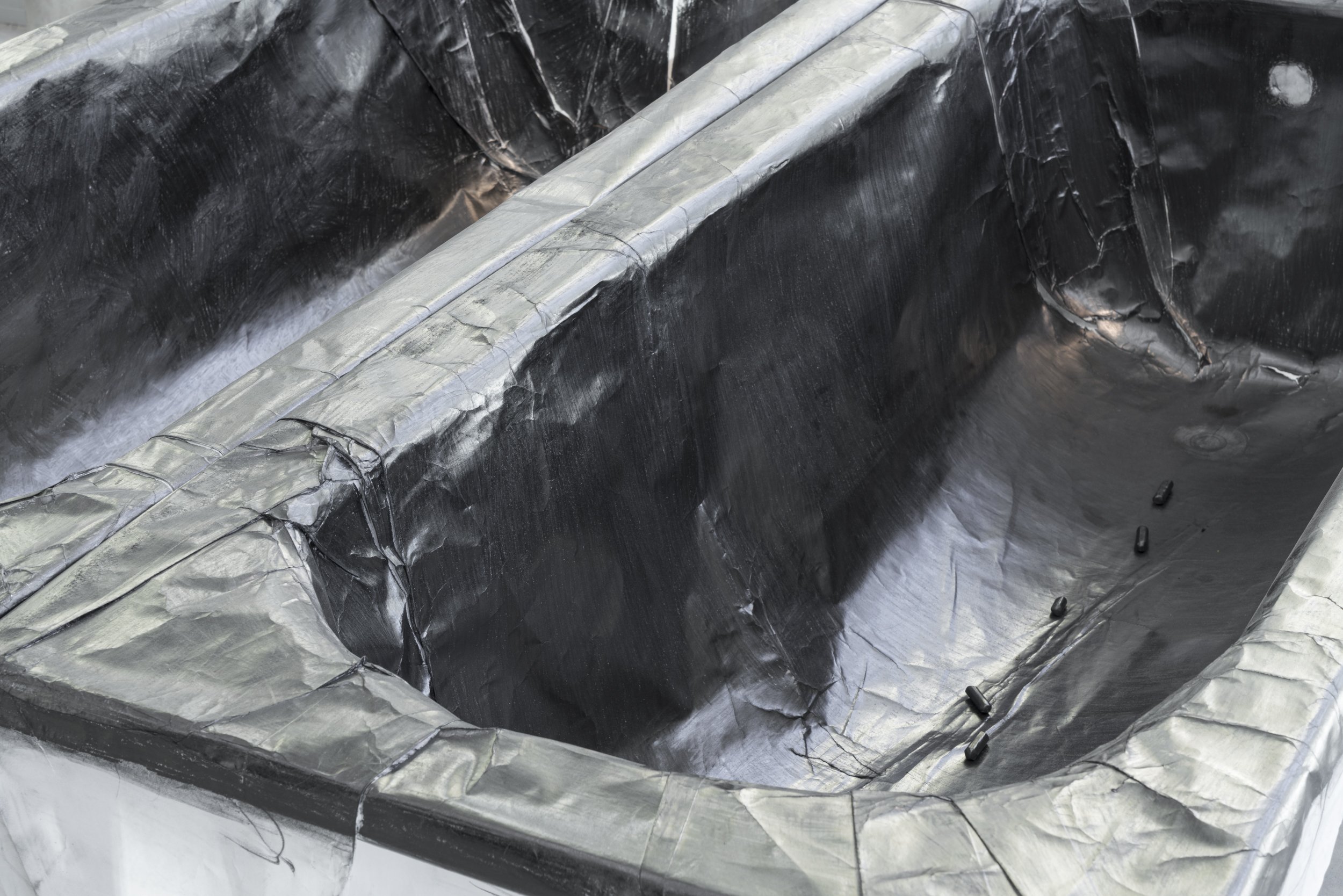
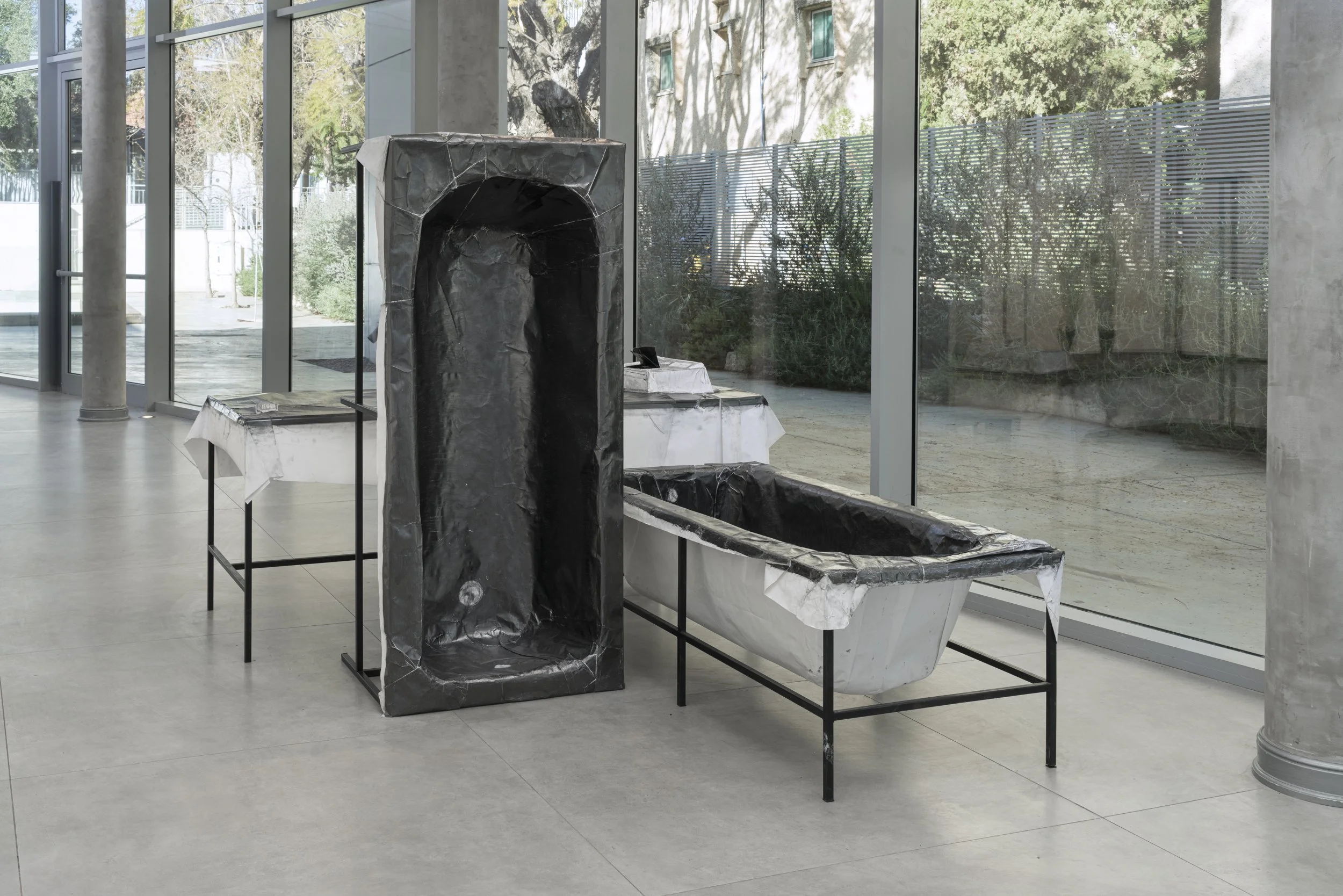
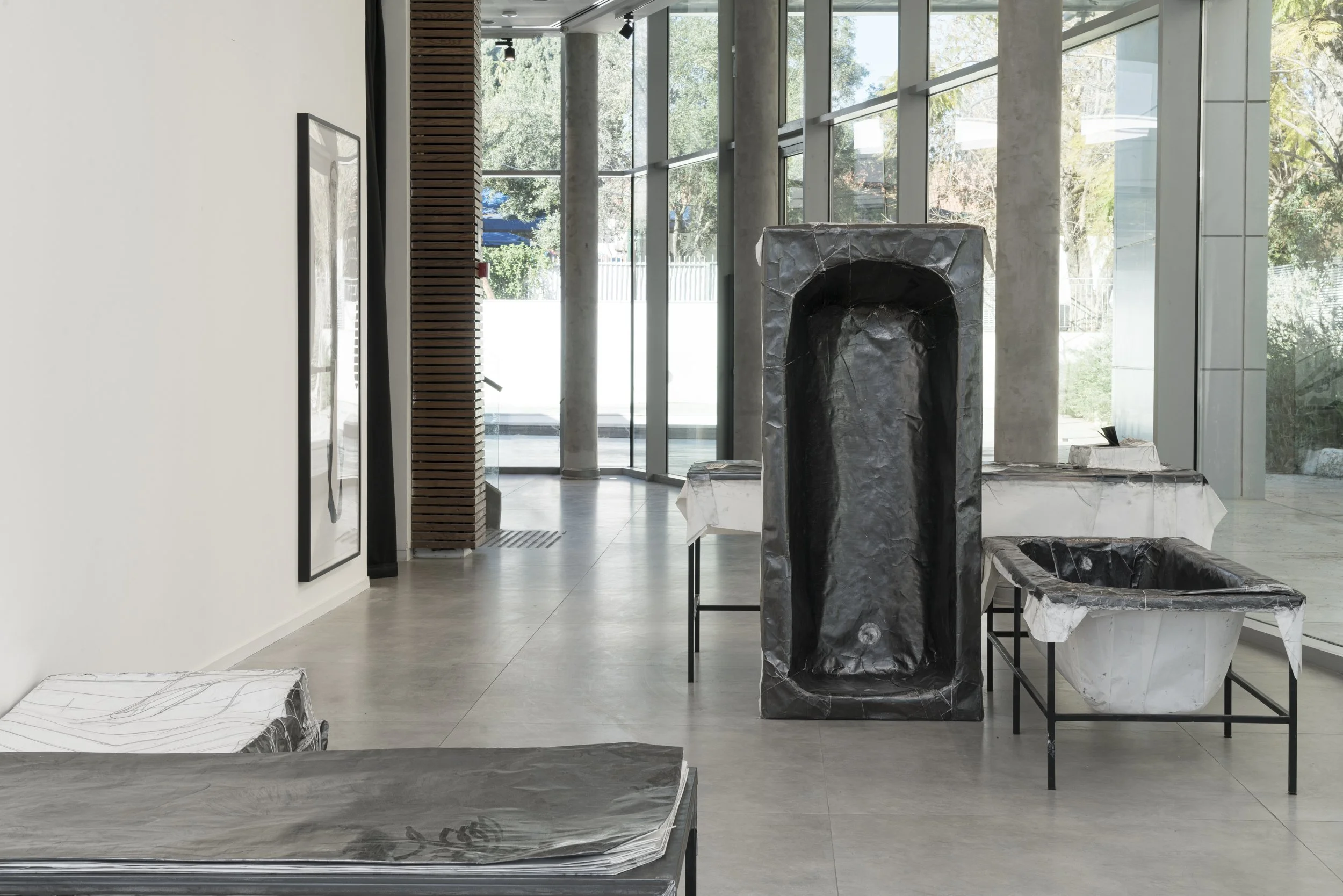
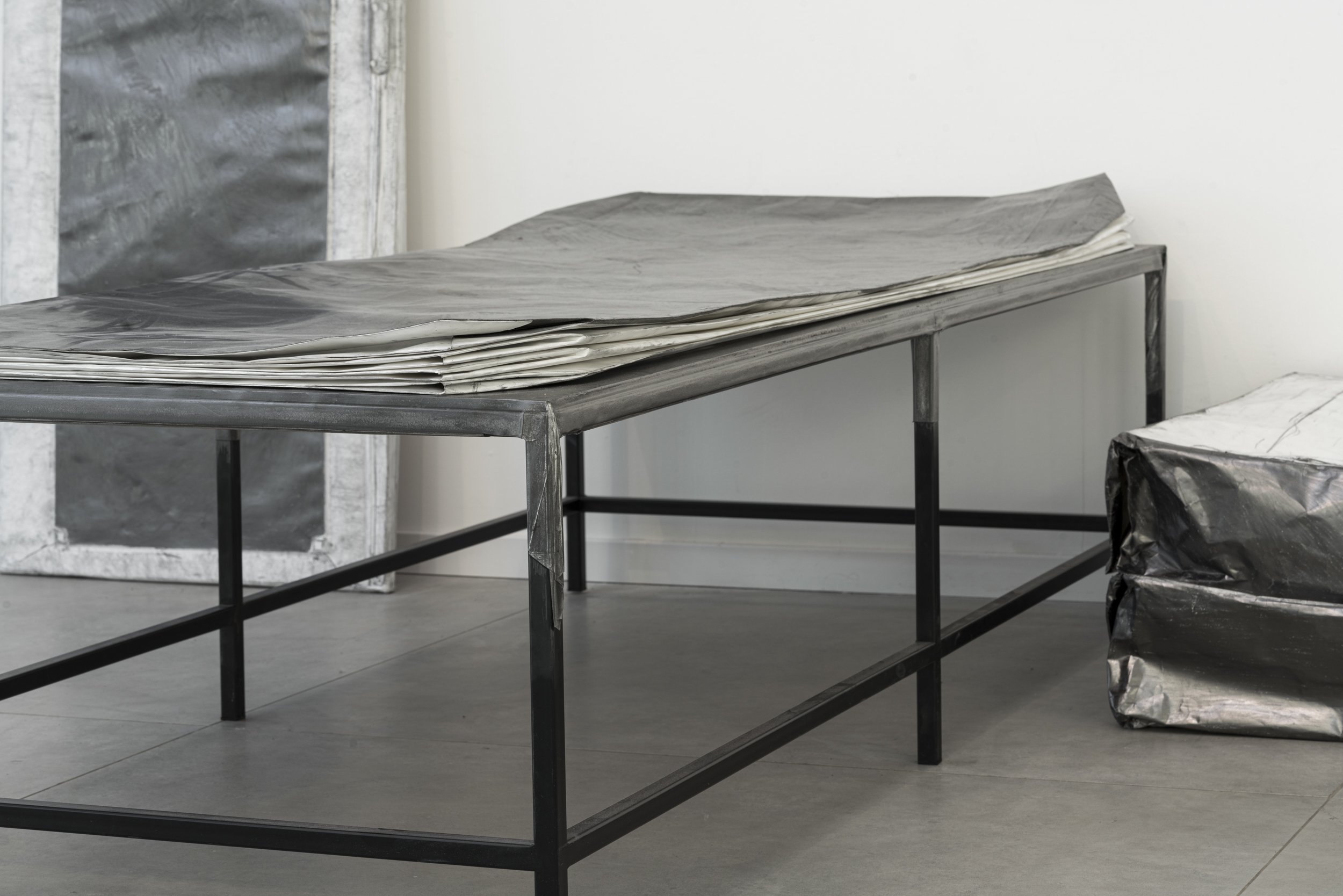
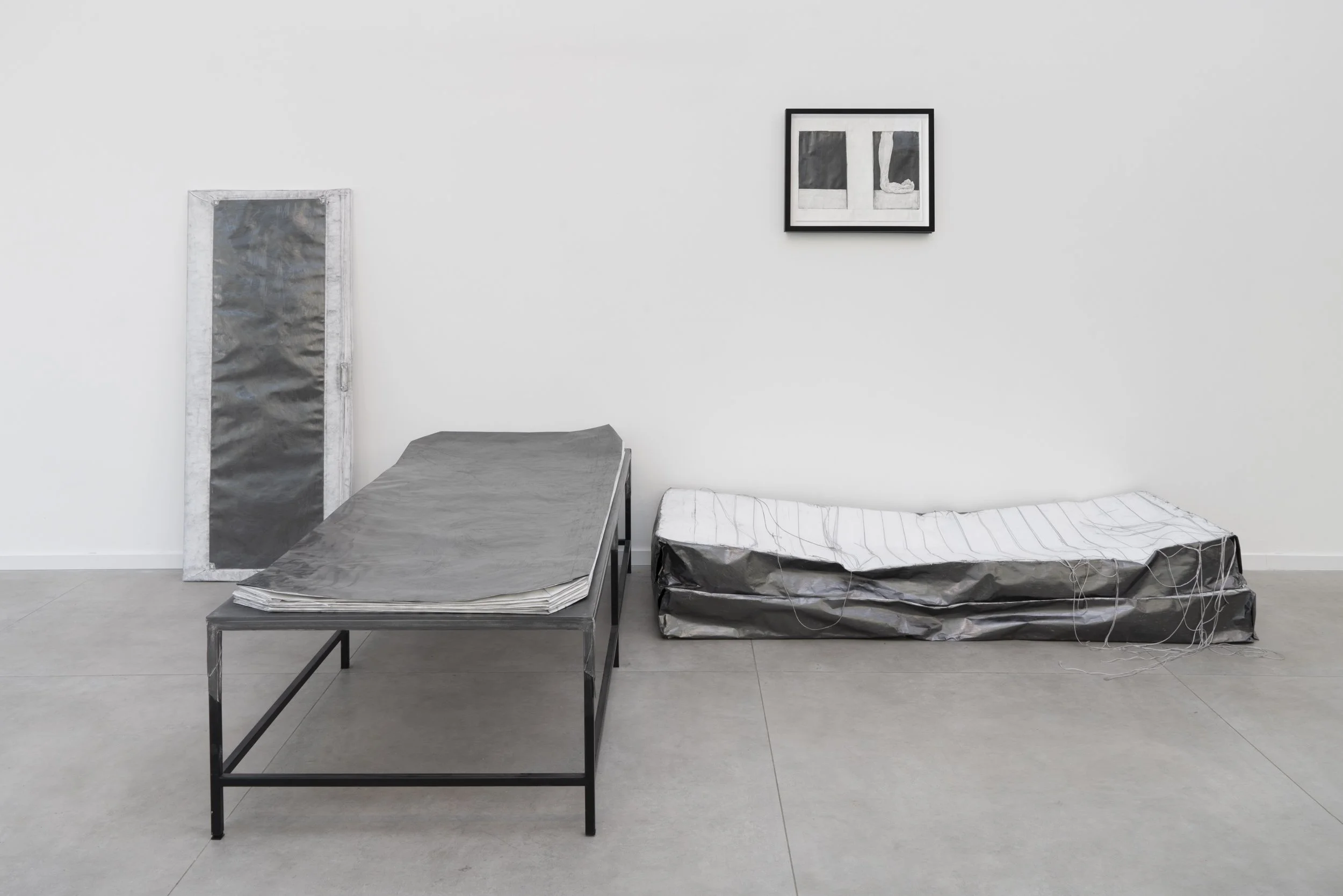
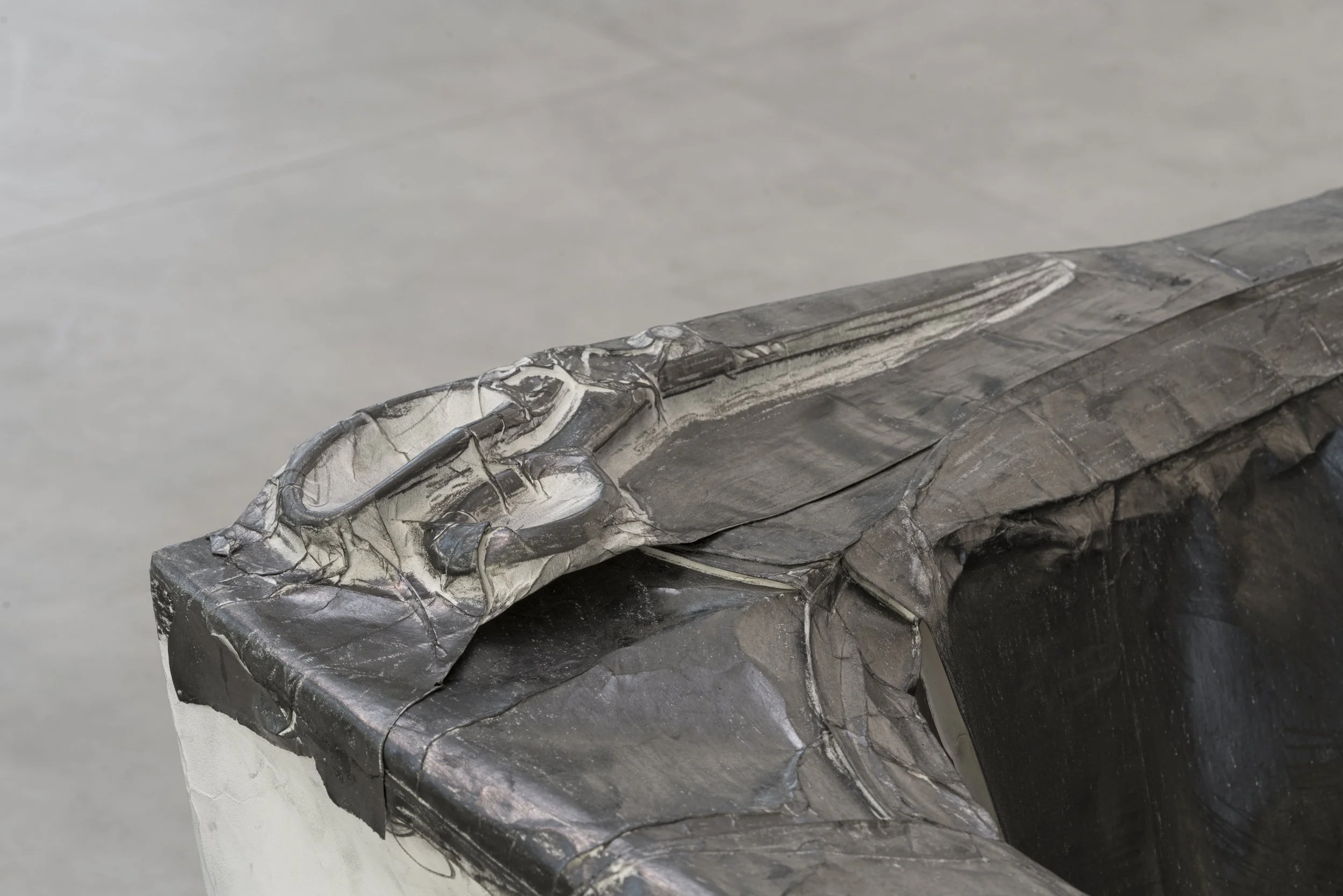
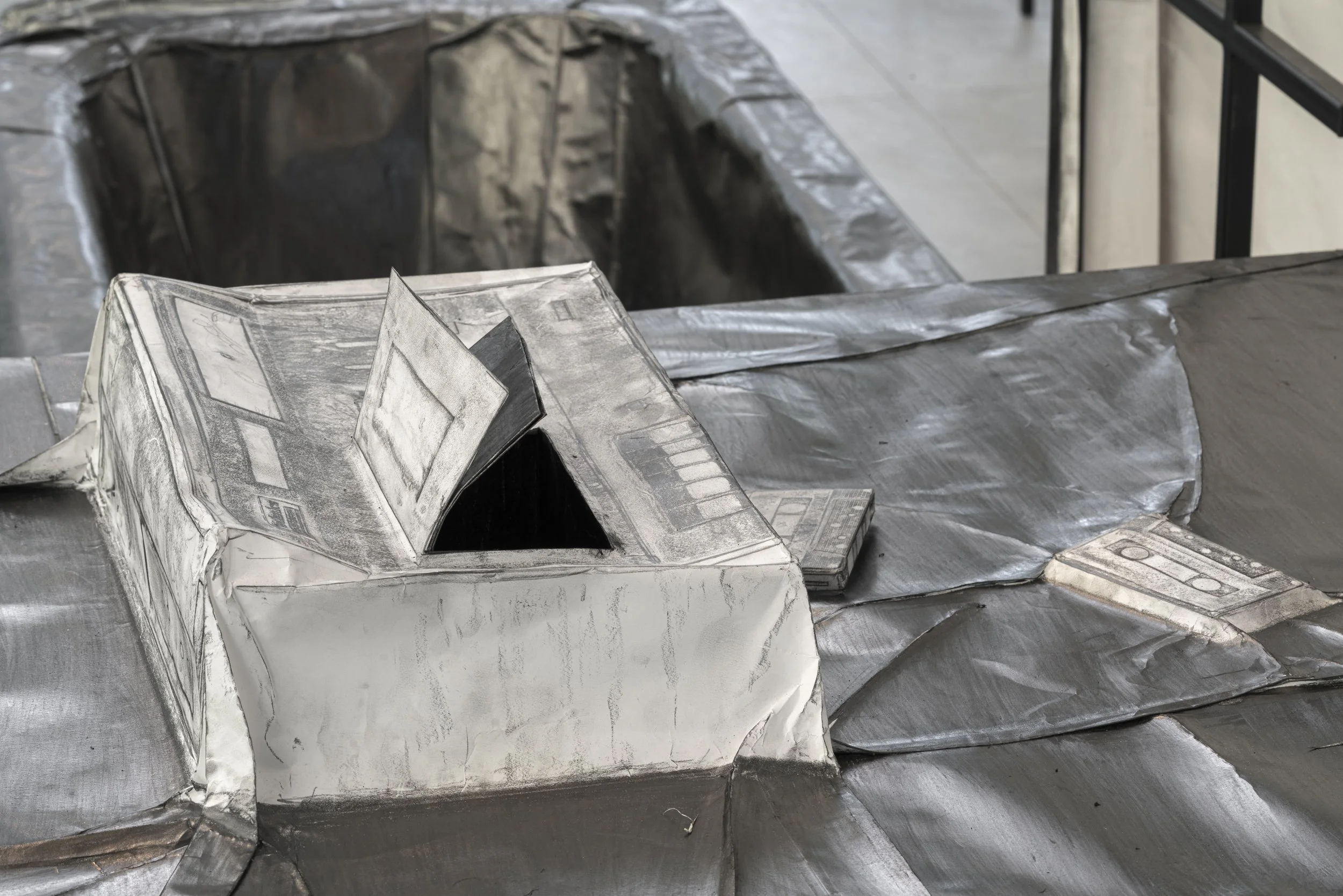
Zack first cuts her mom’s fingers from the old photograph, as though wishing to pierce through the surface of the photo and give it depth; to penetrate the mother’s body and merge with it, so as to be reborn as a grown, distinct, and complete person. At the same time, on a surgical table in what appears to be a lab, Zack fishes out rows of letters from a moist words’ placenta, cutting and compiling them into the words of Rachel’s poem. The parcel of words she received from her mother as a spiritual inheritance becomes a genetic inheritance, a code that holds the power to create a new flesh and blood body. It is not coincidental that the words came from a milky translucent sac, which with a sharp caesarian-like incision, gives birth to moist words. The video is complemented by a drawing installation that uses rubbing (frottage) technique to create a space that wavers between a bathroom and an operating room. Zack stretches white sheets of paper on domestic items designed to serve, wrap, or contain a single human body. Using frottage, she turns them into graphite-blackened empty husks that attest to the objects’ previous existence in the world. Like fragments of old skin that has been shed yet still holds the traces of the body it once encased. The objects oscillate between formation and disappearance, birth and death: bathtubs that resemble wombs, tombs, or open sarcophagi, a stainless-steel desk that brings to mind an autopsy table, while the tape recorder placed at its top makes it seem like a tombstone, a single bed whose skin has been flayed and replaced by a thin paper encasing. Zack amalgamates immersion, purification, and renewal, with death, and with that alludes to the artistic act: the act of creating is comparable to withdrawing into a womb or a sarcophagus – a womb that births death (or eternity).
Ravit Harari
From Hebrew: Maya Shimony
In her practice, Maya Zack peruses documentation and memory, the accumulation of testimonies, and actions she performs on alleged findings in fictional archives. Her exploration of historical memory is entwined with private memory, specifically Zack’s family history: the loss of her father’s family in the Holocaust, and the death of her mother after an illness, when Zack was only 20 years old. In her exhibition Decryption (Hitbasrut) she presents new video, drawing, and installation works, which continue her exploration of memory, loss, and the fading figure of her mother. But now she steps out of the archives and wishes to formulate the memory entailed in the body and its organs: a moist, clammy, and breathing memory, one able to deplete and fill, wither and revitalize – just like the body itself. Projected in the inner space, Decryption is Zack’s most personal film to date, and the first since she became a mother. It centers on the attempt to hold onto memory – and the willingness to let go of it – and explores the physical and spiritual intergenerational transmission between mothers and daughters. The film’s Hebrew title Hitbasrut (literally: the act of receiving an announcement, or more accurately, an “annunciation”) is derived from Rachel the Poetess’s poem “The Messenger Arrived at Night,” which describes the visit of the angel of death by the ill poet’s bed, announcing her imminent death. Zack’s mother used to recite the poem to her young daughter, acting it out with theatrical intensity, and its words – which gain an almost prophetic significance after the mother’s untimely death – were etched in her body and became an annunciation that left its mark and accumulated in her flesh. The memory ingrained in the female body, or the remembrance of a different body, involves aspects of pregnancy and birth. The film opens with the observation of an old photo of her mother as a young woman, and a pseudo-documentary attempt to decipher her waning figure, and continues with acts of cutting and clipping that accompany the entire video work, bringing to mind surgical procedures.
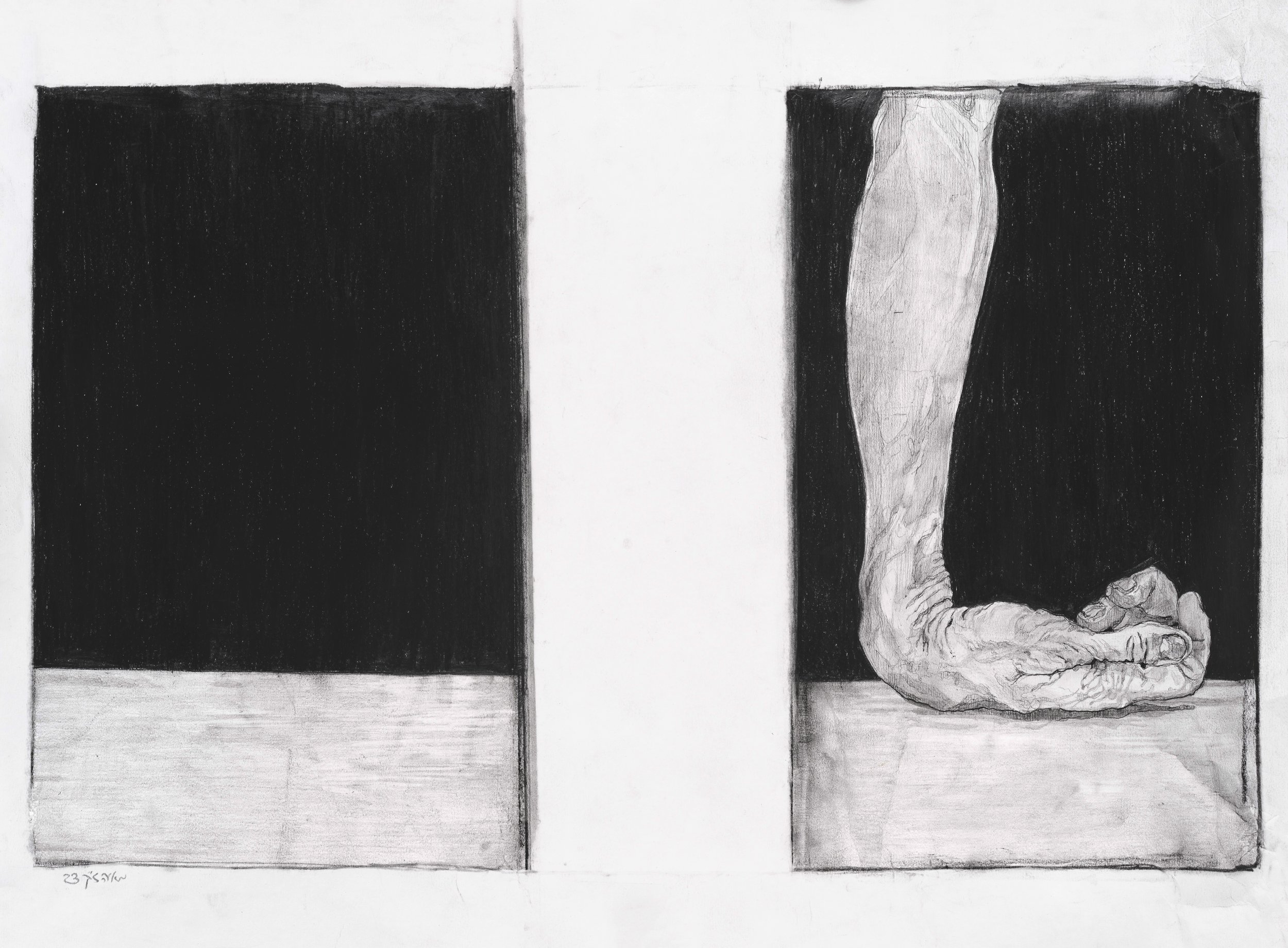
At Her Hand, 2023. Graphite on paper, 35*47cm.
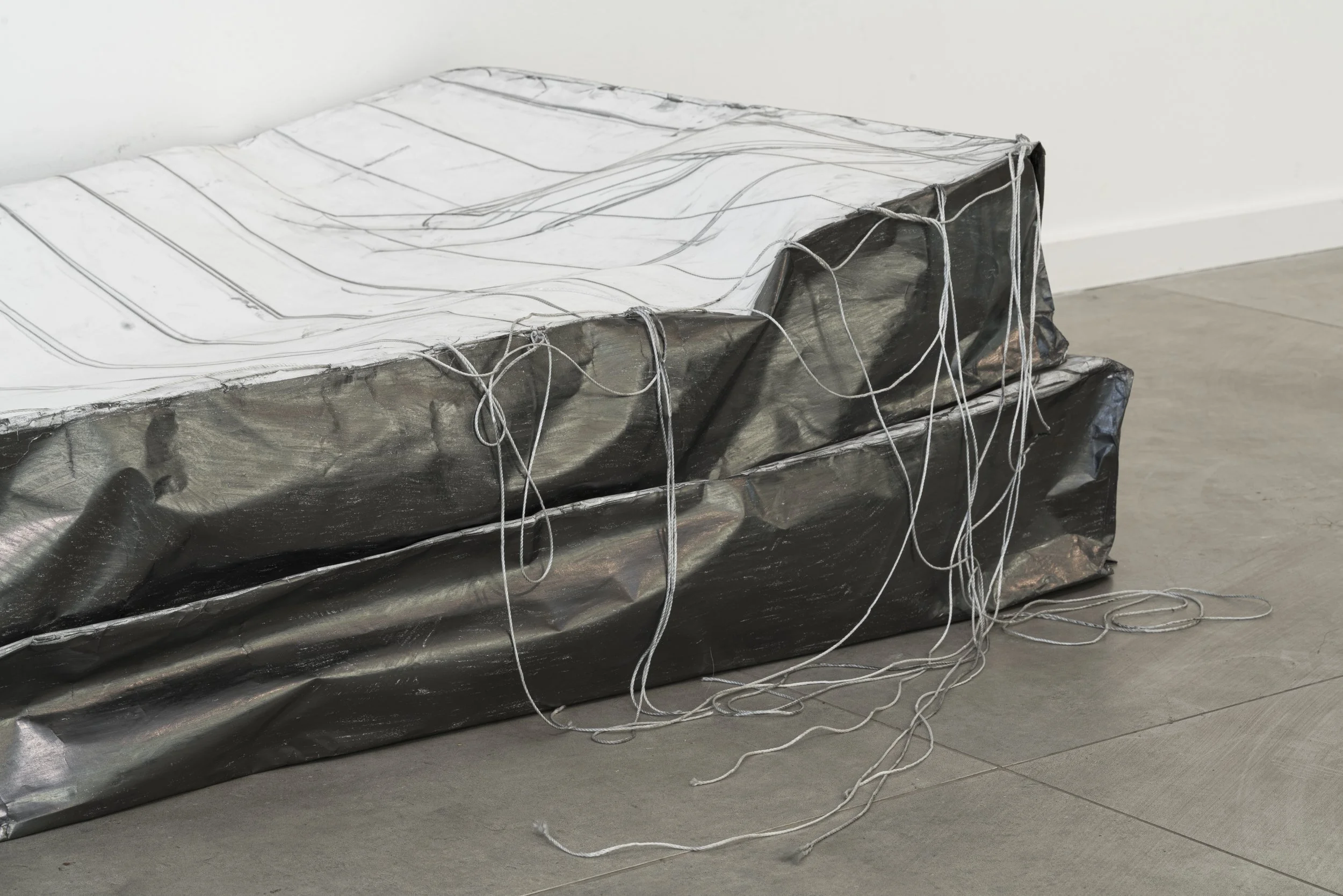
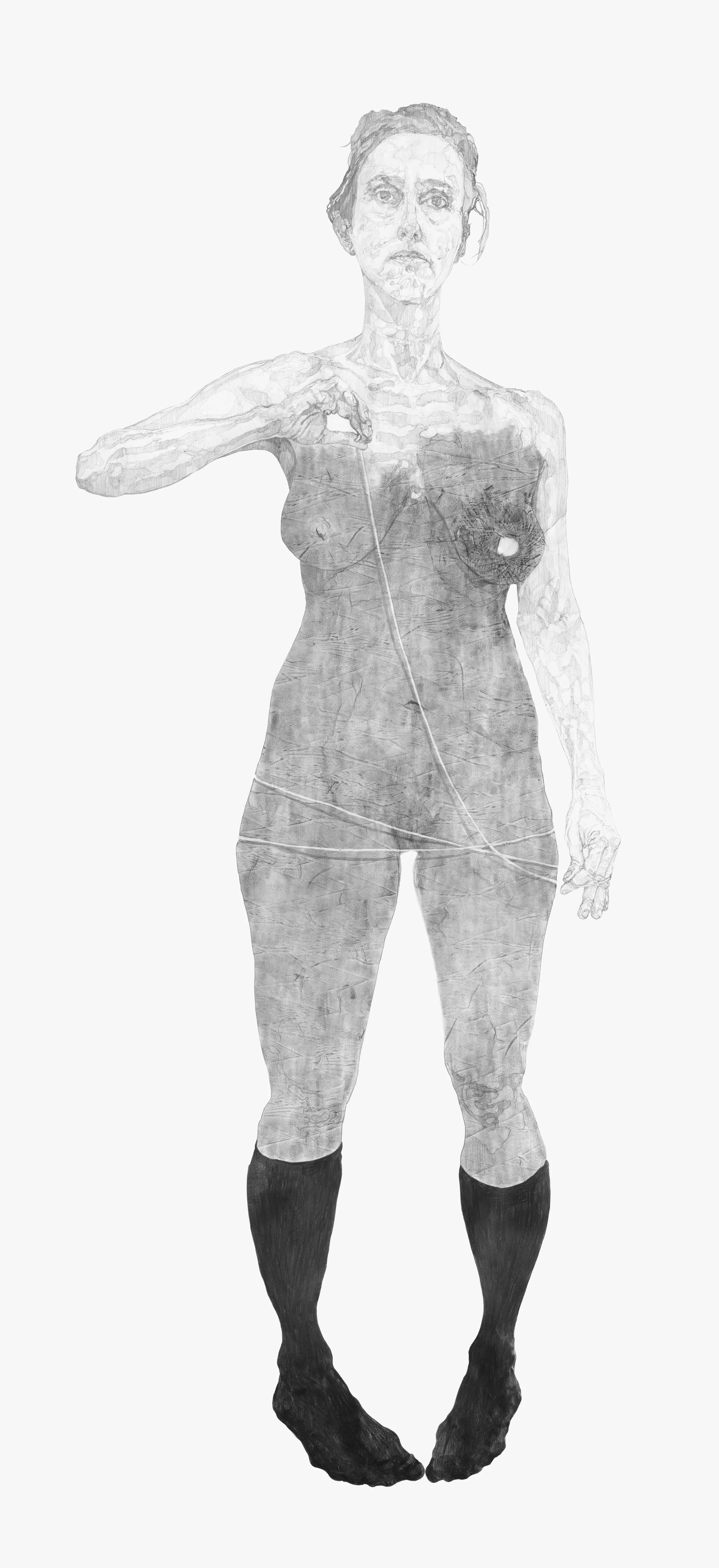
The Secret Cord, 2023. Graphite on paper, 100*200cm.